
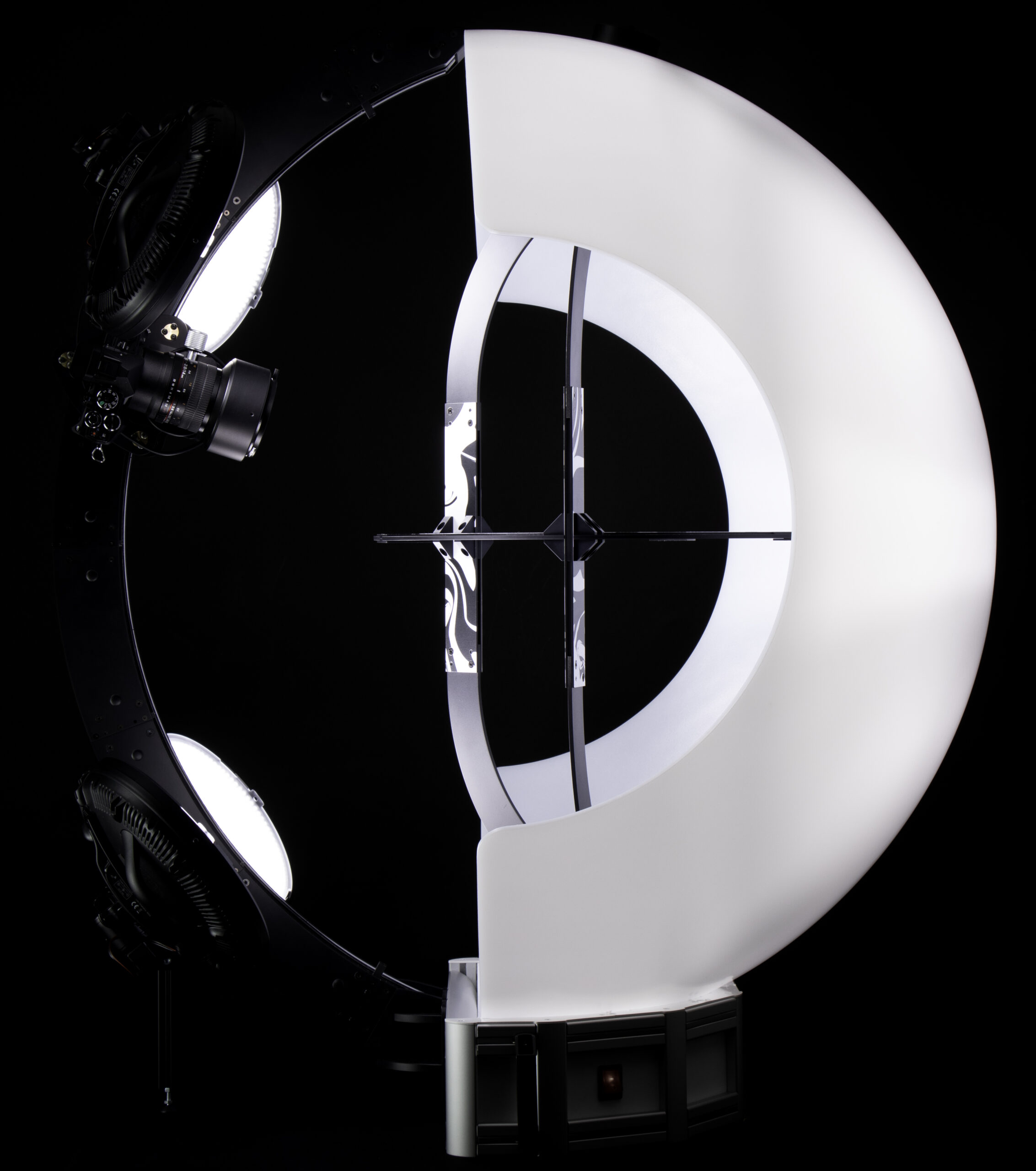
A game changer in 3D technology

A game changer in 3D technology

Museums want to be places of experience, convey facts without being boring, show rarities, amaze and make people go home happy after their visit. And they want to go out into the world themselves. They don’t want to be tied to rooms, they want to be able to be experienced online everywhere. At any time. The Internet makes many things possible, but how do I manage to present exhibits exactly as they look? Three-dimensionally, from all sides, in top quality, without distortion. If this can be achieved, cultural history can be preserved digitally. You can arouse the enthusiasm of many people around the world for exhibits that they would otherwise have to go to a museum to see.

The perfect scanning of a three-dimensional object is no longer a dream of the future: with the CYBERGLOBE Culture, we have launched a game changer for the cultural sector. The 3D scanner makes no compromises in terms of quality. Three-dimensional scanning in itself is not a completely new invention, but what is new is that the digitized image does not differ from the original in any way, no matter how small.

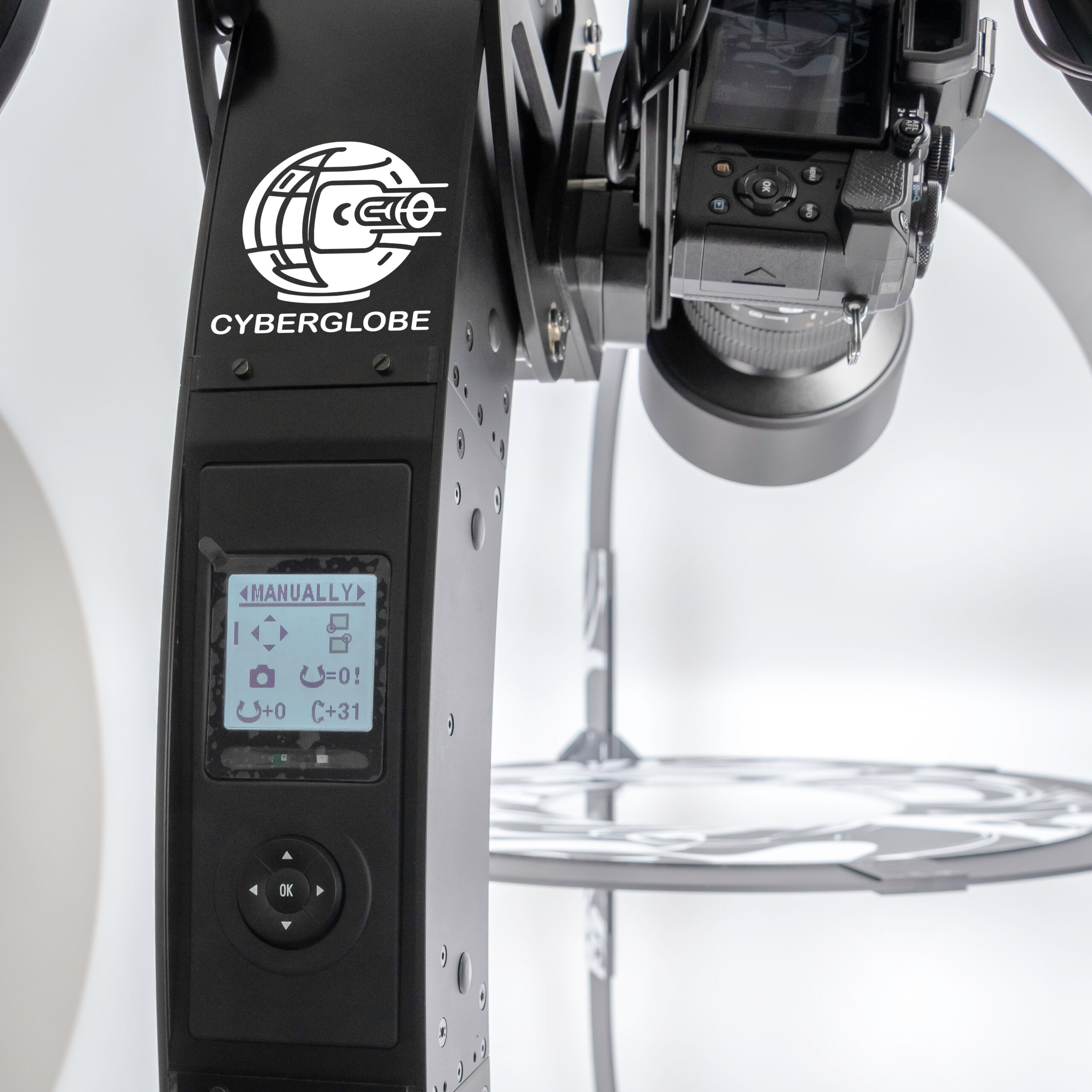
There are also numerous other advantages that make the CYBERGLOBE Culture so special: Operation is straightforward, the device and the software take care of everything, all you have to do is place the object and press a button. The CYBERGLOBE Culture works extremely effectively, which also keeps the costs very low. If you convert the price to the number of strokes of the 3D scanner from book2net, then you can assume €0.47 per digitized item. A fraction of the cost you would have to pay for a service provider. From seven scans per hour, including calculation by the software, are possible.

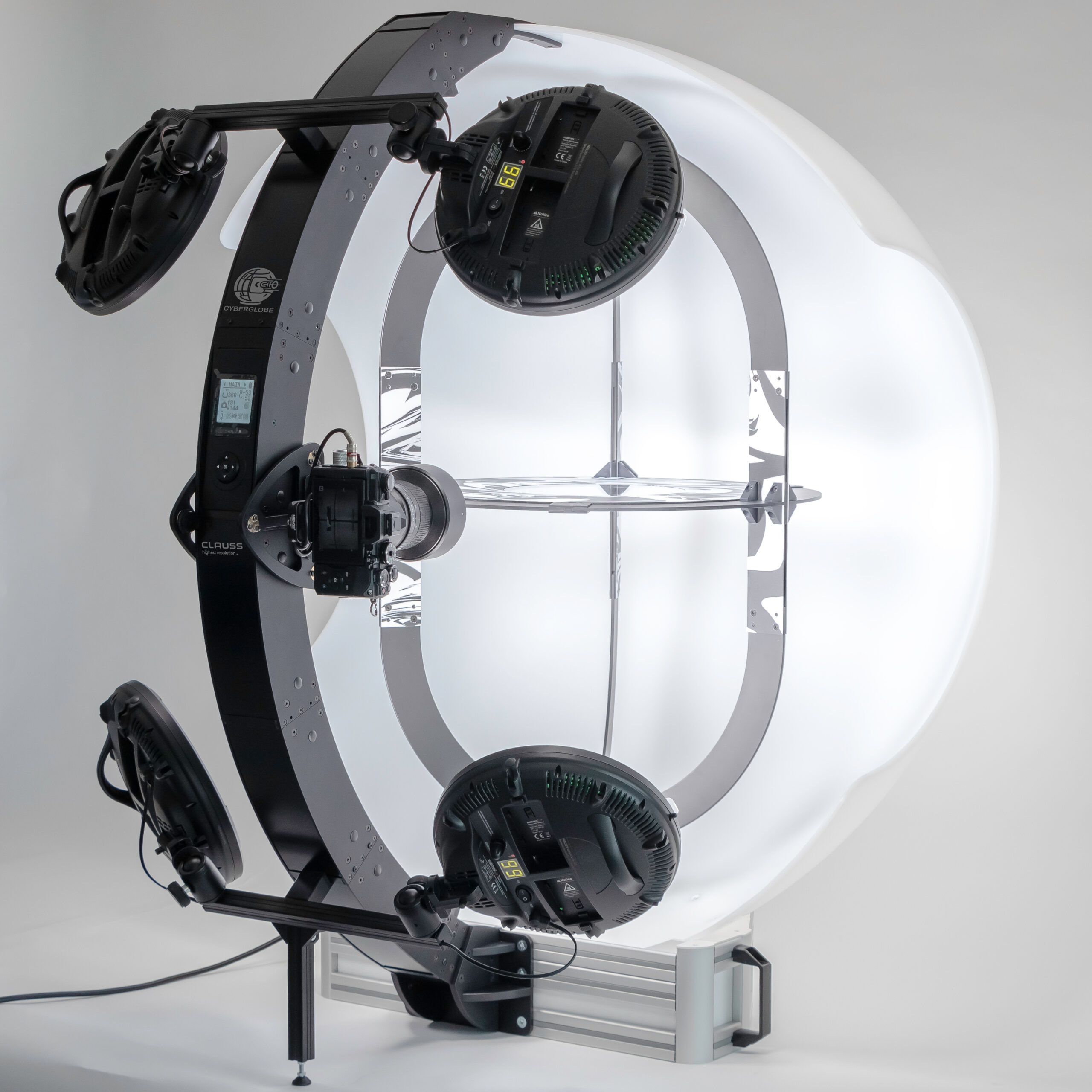
The purchase is therefore worthwhile from a financial point of view. Especially as you don’t need an IT expert to operate it. The employee digitizing the exhibits can do something else while the 80-megapixel camera moves downwards in a semicircle and the 0.1-millimetre-thick, yet robust support table rotates around its own axis. During this process, the camera takes photos from 250 perspectives. These images are then combined by the software to form a large whole without having to make any adjustments.

Further advantages are the longevity of the product made in Germany and the service, because we are also on hand with help and advice after the purchase.

Fully automatic, detailed iamges

Before going into more detail about the technology of the CYBERGLOBE Culture, we should first look at how three-dimensional scanning has worked in the past and what results it has delivered. In the past, there were two possibilities: Either you could walk around the object with a handheld scanner, but it was impossible to always keep the exact same distance to the object. The consequence: distortions. Or you could make complicated set-ups, which took time, and still not manage to scan the object completely. Often, the holder that had been specially created was in the way.

With the CYBERGLOBE Culture there is nothing in the way. The support table is transparent and non-reflective, so there are no problems when scanning from below. The four LED lights, the reflector and the True Color Converter also ensure that the results are true to the original. These components guarantee that the object is correctly illuminated, that no shadows are cast and that the colors are reproduced exactly as they appear on the original. This applies both to static objects such as a vase and to flexible objects such as a medal on a ribbon.
A system „out of the box“

State-of-the-art technology, finely tuned to each other, ensures excellent results. Objects with a maximum diameter and height of 46 cm and a maximum weight of 20 kg can be transferred to the digital world. Anyone interested in the exhibits in a museum can virtually “bring them home”. The three-dimensional digital image is a huge enrichment, not least for scientific research, as every little detail can be viewed without having to pick up the object. Of course, this also protects the objects. This also applies elsewhere: the CYBERGLOBE Culture is very mobile, so that it can easily be brought to the object − the reverse is not necessary.

With the market launch of CYBERGLOBE Culture we have succeeded in giving a decisive boost to digitalization in the cultural sector. The past can be transported into the future. Vividly and faithfully. The technology is now available.

VIDEO

Ein Game Changer in der 3D-Technik

Ein Game Changer in der 3D-Technik

Museen wollen Erlebnisorte sein, Fakten vermitteln, dabei aber nicht langweilen, Raritäten zeigen, für Erstaunen sorgen und die Menschen nach dem Besuch glücklich nach Hause gehen lassen. Und sie möchten selbst hinaus in die Welt. Nicht an Räume gebunden, sondern online überall erlebbar sein. Jederzeit. Das Internet macht vieles möglich, doch wie schaffe ich es, Ausstellungsstücke exakt so zu präsentieren, wie sie aussehen? Dreidimensional, von allen Seiten, in Top-Qualität, ohne Verzerrungen. Wenn das gelingt, lässt sich Kulturgeschichte digital sichern. Bei vielen Menschen weltweit kann man so Begeisterung für Ausstellungstücke wecken, für die man sonst ins Museum gehen müsste.

Das perfekte Scannen eines dreidimensionalen Gegenstandes ist nun keine Zukunftsmusik mehr: Mit dem CYBERGLOBE Culture haben wir einen Game Changer für die Kulturbranche auf den Markt gebracht. Der 3D-Scanner macht hinsichtlich der Qualität  keine Kompromisse. Dreidimensionales Scannen an sich ist keine ganz neue Erfindung, neu ist allerdings, dass sich das Digitalisat an keiner noch so kleinen Stelle vom Original unterscheidet.

Hinzu kommen zahlreiche weitere Vorteile, die den CYBERGLOBE Culture so besonders machen: Die Bedienung ist unkompliziert, das Gerät und die Software erledigen alles, man muss nur das Objekt platzieren und einen Knopf drücken. Der CYBERGLOBE Culture arbeitet extrem effektiv, was auch die Kosten sehr niedrig hält. Rechnet man den Preis auf die Schlagzahl des 3D-Scanners von book2net um, dann kann man von 0,47€ pro Digitalisat ausgehen. Ein Bruchteil der Kosten, die man für einen Dienstleister bezahlen müsste. Pro Stunde sind ab sieben Scan-Vorgänge inklusive Berechnung durch die Software möglich.

Die Anschaffung lohnt sich also aus finanzieller Sicht. Zumal man für die Bedienung keinen IT-Experten benötigt. Der Mitarbeiter, der die Ausstellungsstücke digitalisiert, kann etwas anderes erledigen, während die 80-Megapixel-Kamera in einem Halbkreis nach unten fährt und sich – darauf abgestimmt – der 0,1 Millimeter dicke und dennoch robuste Objektträger um die eigene Achse dreht. Bei diesem Vorgang fertigt die Kamera Fotos aus 250 Perspektiven. Diese Aufnahmen werden im Anschluss daran von der Software zu einem große Ganzen zusammengesetzt, ohne dass man Einstellungen vornehmen müsste. 

Weitere Vorteile sind die Langlebigkeit des Produktes made in Germany und der Service, denn wir stehen auch nach dem Kauf mit Rat und Tat zur Seite.

Vollautomatische, detaillierte Aufnahmen

Bevor es detaillierter um die Technik des CYBERGLOBE Culture geht, sollte man zunächst darauf schauen, wie dreidimensionales Scannen bisher vonstatten gegangen ist und welche Ergebnisse es geliefert hat. In der Vergangenheit gab es zwei Möglichkeiten: Entweder konnte man das Objekt mit einem Handscanner umrunden, dabei war es allerdings unmöglich, immer den exakt gleichen Abstand zum Objekt zu halten. Die Konsequenz: Verzerrungen. Oder man machte komplizierte Aufbauten, brauchte dafür entsprechend Zeit und schaffte es doch nicht, den Gegenstand komplett zu scannen. Denn die Halterung, die man eigens kreiert hatte, war im Weg.

Beim CYBERGLOBE Culture ist gar nichts im Weg. Der Objektträger ist durchsichtig und reflektiert nicht, deshalb gibt es auch keine Probleme beim Scannen von unten. Für das originalgetreue Ergebnis sorgen außerdem die vier LED-Leuchten, der Reflektor und der True Color Converter. Diese Komponenten bewirken, dass das Objekt richtig ausgeleuchtet wird, dabei kein Schattenwurf entsteht und dass die Farben exakt so wiedergegeben werden, wie sie auf dem Original zu sehen sind. Das alles gilt sowohl für statische Objekte wie zum Beispiel eine Vase, als auch für flexible Dinge, etwa eine Medaille an einem Band.

Ein „Out of the Box“ System

Hochmoderne Technik, fein aufeinander abgestimmt, sorgt für exzellente Ergebnisse. Und so lassen sich Objekte mit einem Maximaldurchmesser und einer Maximalhöhe von 46 cm und einem Gewicht von maximal 20 kg in die digitale Welt übertragen. Jeder, der sich für die Ausstellungsstücke eines Museum interessiert, kann sie sich quasi „nach Hause holen“. Nicht zuletzt für die Wissenschaft ist das dreidimensionale Digitalisat eine Bereicherung, lässt sich doch jedes noch so kleine Detail betrachten, ohne dass man den Gegenstand in die Hand nehmen müsste. Die Objekte werden so natürlich auch geschont. Das gilt übrigens auch an anderer Stelle: Der CYBERGLOBE Culture ist sehr mobil, so dass er problemlos zum Objekt gebracht werden kann − der umgekehrte Weg ist nicht notwendig.

Mit der Markt-Einführung des CYBERGLOBE Culture ist es uns gelungen, der Digitalisierung in der Kulturbranche einen entscheidenden Schub zu geben. Die Vergangenheit kann in die Zukunft transportiert werden. Anschaulich und originalgetreu. Die Technik dafür ist jetzt da.

VIDEO