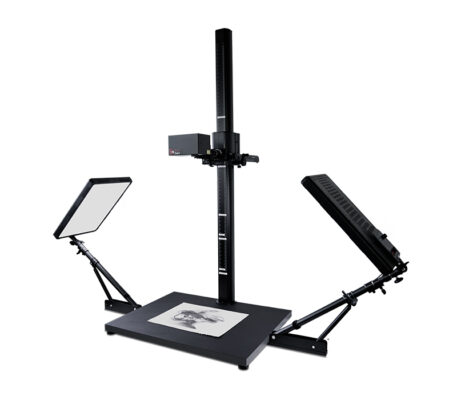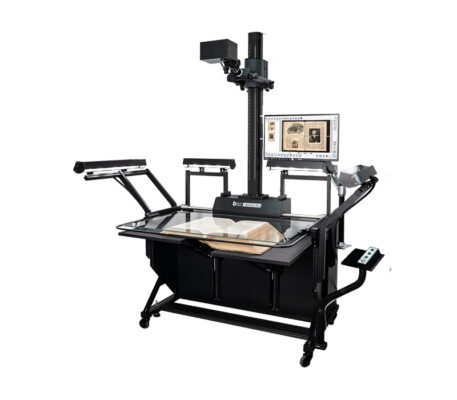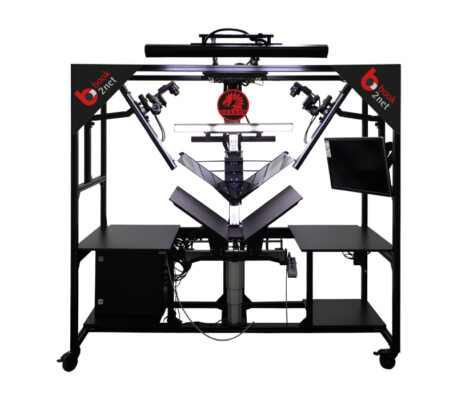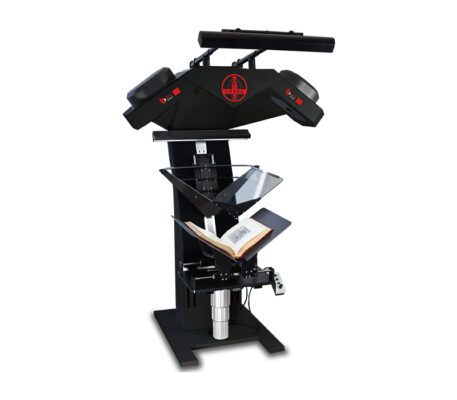
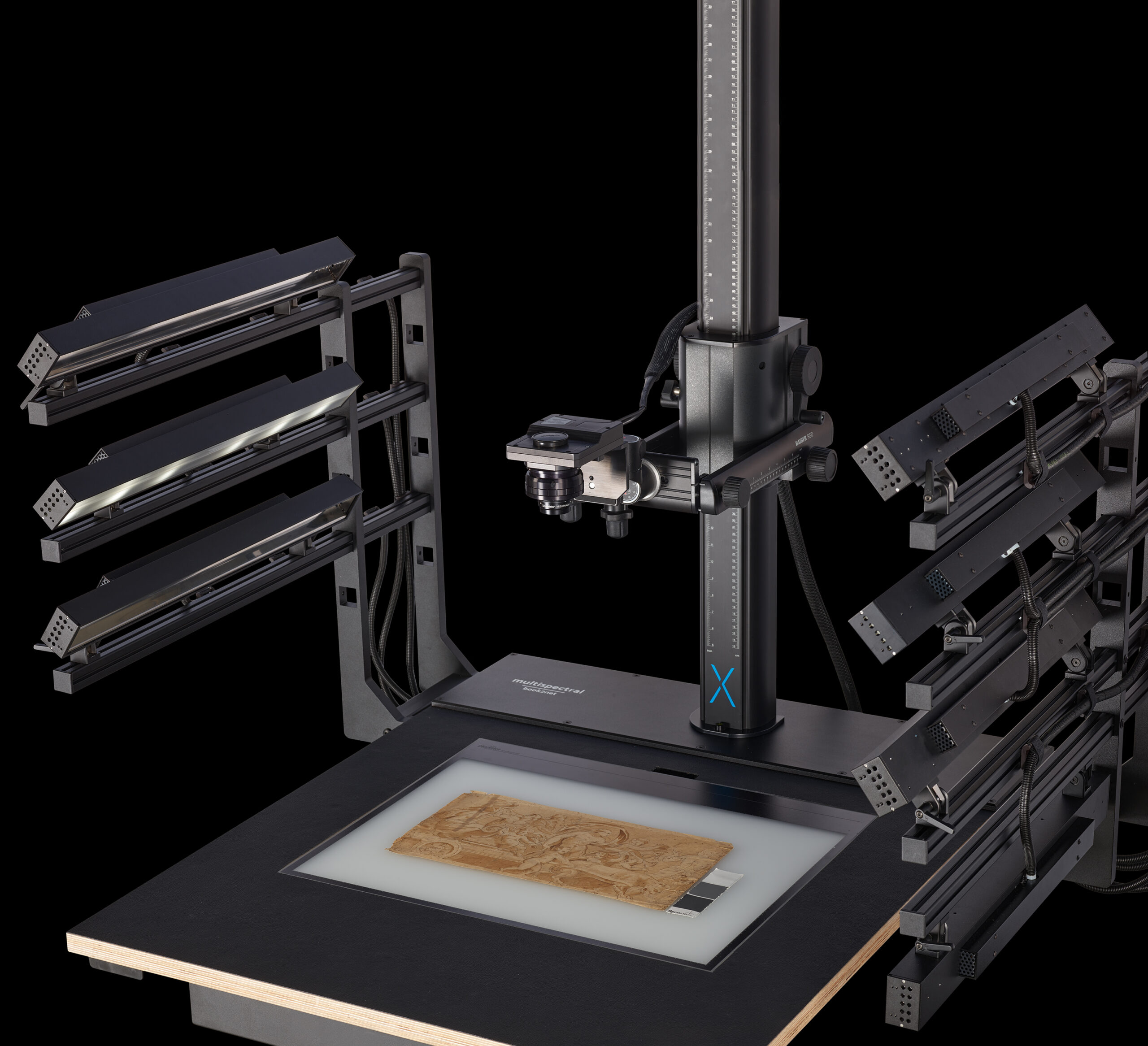
Sistema multiespectral
Innovador sistema de cámara multiespectral sin filtro para el análisis científico y material-tecnológico del patrimonio cultural
Análisis sin contacto de dibujos, materiales de archivo y documentos
Si un documento se escanea perfectamente, la copia digital es fiel al original hasta el más mínimo detalle. No hay zonas mal iluminadas, ni borrosas, ni decoloradas. Los productos book2net son sinónimo precisamente de esta calidad. El sistema multiespectral book2net va un paso más allá: se sumerge en las profundidades del original y hace visible lo que no lo es a simple vista.
Además de crear una imagen digital de alta calidad, este sistema de digitalización permite analizar estructuras y materiales. El uso de luz infrarroja o ultravioleta hace visibles zonas que de otro modo permanecerían ocultas. Se definen distintas bandas de ondas en función de lo que se quiera hacer visible.
Esto permite resaltar filigranas y estructuras del papel, o analizar el material utilizado para escribir un texto, dibujar un boceto o pintar una obra de arte. Incluso las manchas de moho, los procesos de envejecimiento del papel o las restauraciones antiguas pueden hacerse visibles de forma rápida y sencilla gracias a la sofisticada tecnología del sistema multiespectral book2net.
De este modo, el sistema no sólo cumple la misión de hacer accesible sin límites el patrimonio cultural a las generaciones futuras mediante la digitalización, sino que también es una bendición para la investigación. Con un mínimo esfuerzo, las distintas «capas» del original pueden hacerse visibles a una enorme velocidad.
El software es fácil de usar, no deja nada que desear y debería gustar a todos los usuarios. Es fácil crear varias imágenes digitales de un mismo original con distintos escenarios de adquisición, de modo que sean visibles distintos aspectos al mismo tiempo: mientras que, por ejemplo, una imagen resalta la filigrana, otra hace visibles las zonas restauradas del papel y una tercera muestra todas las zonas en las que, por ejemplo, se utilizó material carbonoso para escribir o dibujar. El software permite superponer estas imágenes con precisión de píxeles, por así decirlo sumándolas, pero también restándolas para investigaciones científicas específicas.
Además del análisis de materiales en sí, el hecho de que no sea necesario cambiar los filtros es un punto fuerte especial, ya que el sistema funciona sin filtros. Por lo tanto, no hay intervención física en el aparato, ni vibraciones que puedan afectar a la calidad de los resultados del análisis. Todo se realiza de forma fluida, rápida y sencilla a través del software.
Instituciones de renombre como la Klassik Stiftung Weimar ya utilizan el sistema multiespectral book2net para examinar científicamente sus tesoros artísticos. Entre ellos figuran dibujos de Alberto Durero, Leonardo da Vinci, Lucas Cranach y Johann Wolfgang von Goethe. Así, por un lado, se aseguran para el futuro valiosas obras de arte y, por otro, se obtiene nueva información sobre su estado, las medidas de restauración necesarias, los procesos creativos, la autoría y la autenticidad.
Todo ello hace que el sistema multiespectral sea interesante no sólo para las ciencias culturales de museos, archivos y bibliotecas, sino también como instrumento de prueba para otros campos de aplicación, como el jurídico y el forense.
Características
Intro
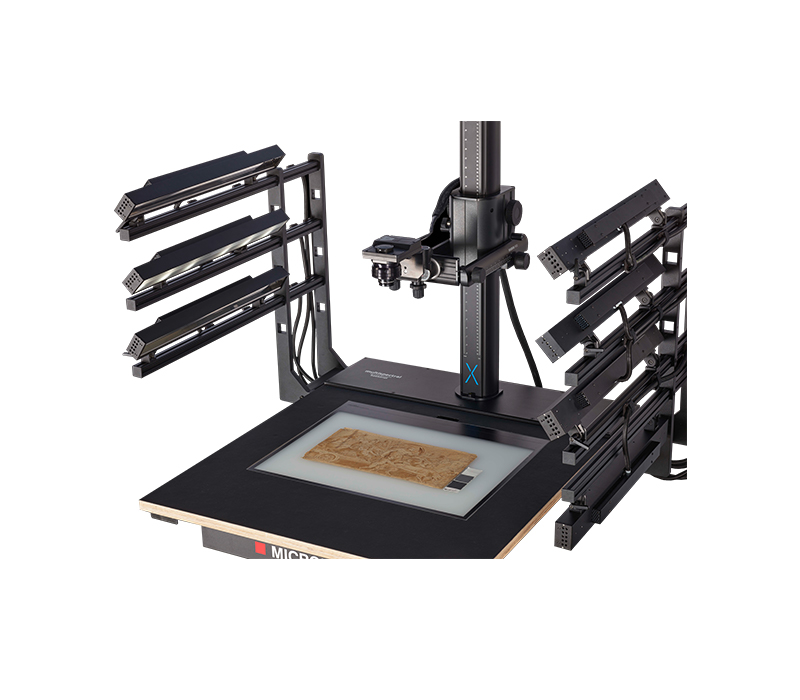
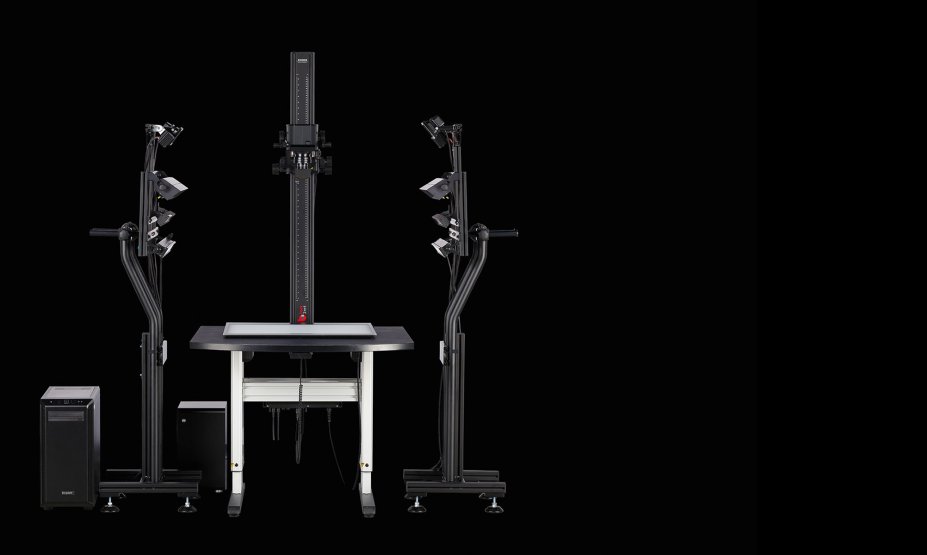
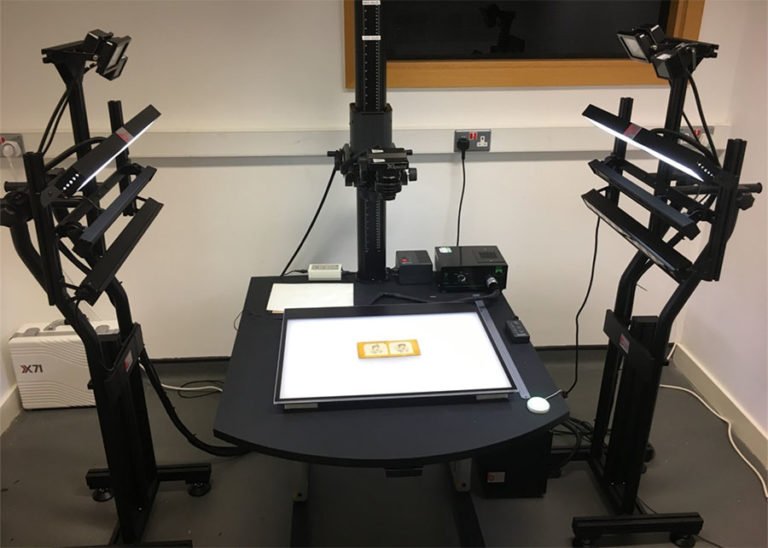
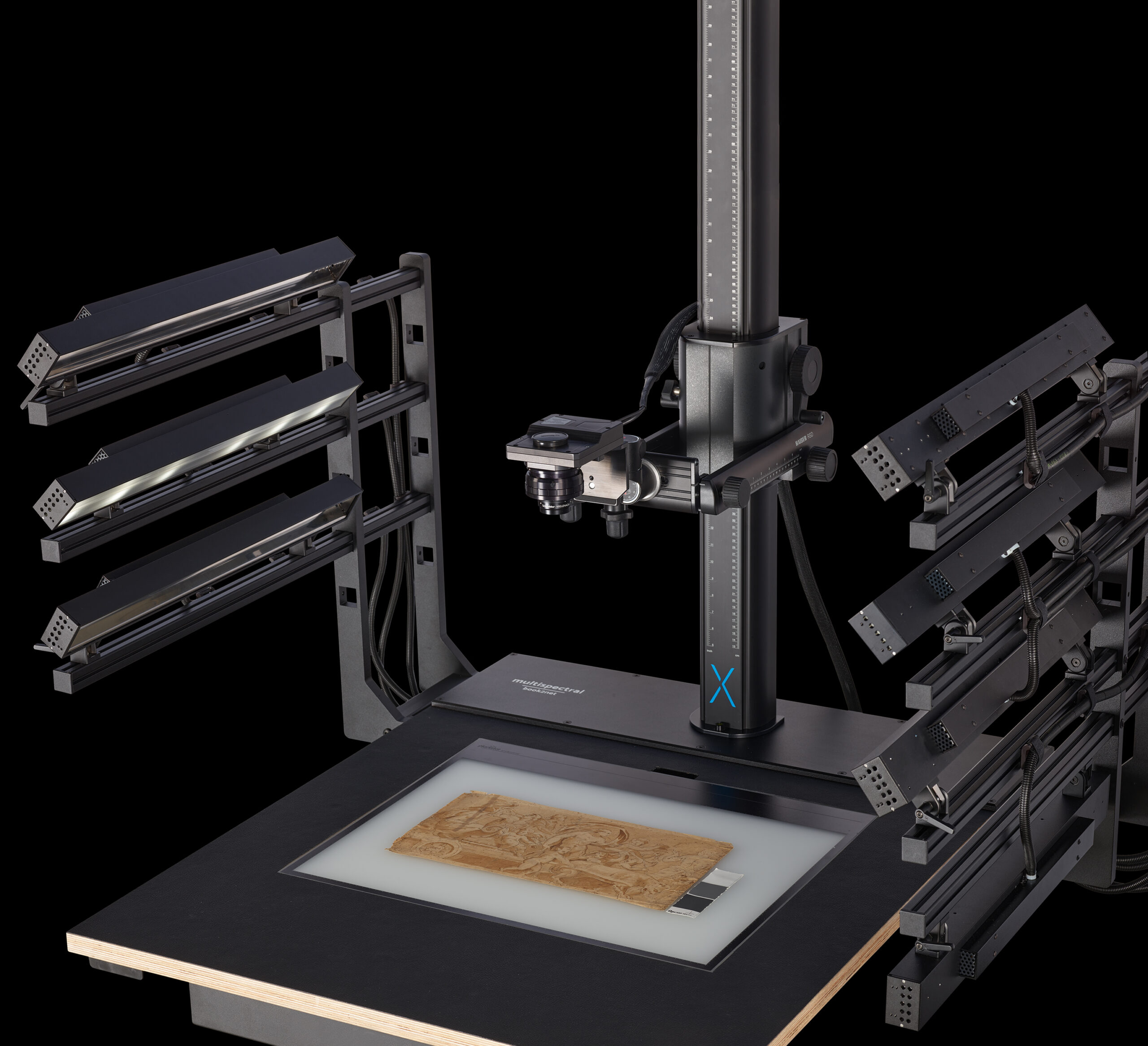
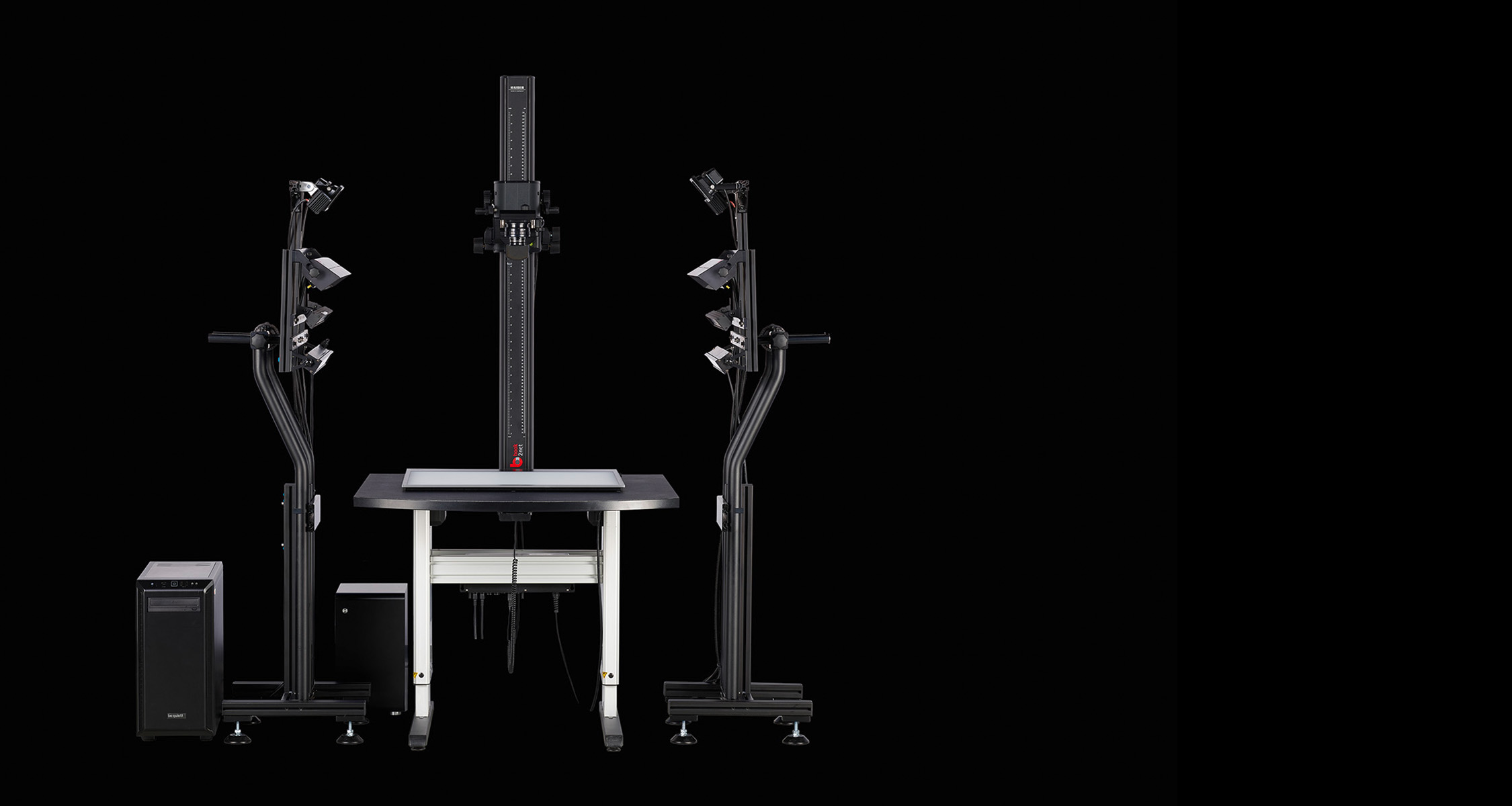
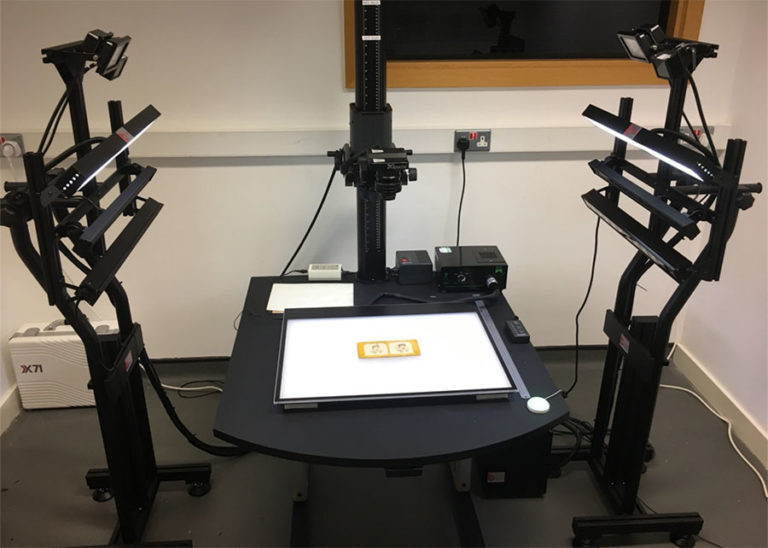
book2net ha desarrollado un nuevo método para el análisis multiespectral de documentos y dibujos. Pueden realizarse escaneados individuales o en serie a intervalos de nm definibles. Los resultados de los escaneados pueden superponerse y analizarse con precisión de píxel.
El proceso book2net funciona sin cambiar los filtros (es decir, sin vibraciones) y sin corrección posterior de la nitidez y el enfoque en los rangos espectrales (es decir, con precisión de píxel a escala). El sistema multiespectral book2net es una herramienta innovadora y no invasiva para el análisis científico y material-tecnológico, para la investigación forense y para la documentación exhaustiva de obras de arte, procesos de creación, autenticidad o estado.
Con la ayuda de nuestro sistema, se pueden generar en pocos segundos hasta 11 imágenes en una amplia gama de longitudes de onda y sus combinaciones en procesos totalmente automatizados, según el modelo. El sistema permite la visualización de tintas descoloridas, dibujos subyacentes, combinaciones de materiales utilizados en la escritura, los dibujos o las pinturas, así como la detección de huellas de procesos de envejecimiento orgánico. Esto permite verificar la integridad material de los originales y realizar análisis detallados de autenticidad.
Sensor de alto rendimiento
- Tecnología CMOS COLOR de obturador global
- Desarrollo especial con rango dinámico muy amplio
- Evaluación de señal analógica nativa
- Resolución de hasta 8200 ppi
Óptica
- Schneider book2net spectral – Lente multiespectral UV-IR-VIS de 45 mm
- Schneider book2net spectral – Lente multiespectral UV-IR-VIS de 40 mm (opcional)
Gama multiespectral
- 365 – 1.100 nm
Escenarios de imagen
- VIS imagen en calidad repro
- UVL Luminiscencia ultravioleta
- UVR Reflectografía ultravioleta
- NIR Fotografía en infrarrojo cercano (940 nm)
- Material o estructura del papel con detección de marca de agua
- UV Imagen en falso color
- IR Imagen en falso color
- Luz transmitida
- Luz rasante
Software de escaneado
- Profiscan MSP e ImageProcess MSP para un control óptimo de los dispositivos y el procesamiento de la información
- Procesos estandarizados y gestión de perfiles con sólo pulsar un botón
- Función de vista previa
- Visualización sincronizada de diferentes escenarios de obtención de imágenes
Gestión del color
Integrated true color management according to METAMORFOZE, FADGI, ISO/TS 19264:1 2017, ISO/TS 19264:1 2021, ICC standard regarding color quality, resolution, noise & linearity.
Referencias
“Un instrumento verdaderamente milagroso”
Jutta Keddies, Jefe de Restauración de Dibujos, Gráfica y Fotografía
Museo Städel Fráncfort del Meno, Blog Städel, 8 de febrero, 2024
Contáctenos
Non-contact analysis of drawings, archival materials and documents
If a document is scanned perfectly, the digital copy is captured true to the original down to the last corner. There are no poorly lit areas, no blurring, no discoloration. The book2net products stand for precisely this quality. The book2net multispectral system goes one step further: it delves into the depths of the original, making visible what cannot be seen with the naked eye.
In addition to creating a high-quality digital image, this scanning system analyzes structures and material. By using infrared or UV light, areas can be made visible that would remain hidden without this technology. Depending on what exactly you want to make visible, different wavebands are set.
For example, watermarks and paper structures can be highlighted, or the material used to write a text, draw a sketch or paint a work of art can be analyzed. Even foxing stains, ageing processes of the paper or old restorations can be made visible quickly and easily thanks to the sophisticated technology of the book2net multispectral system.
The system not only fulfills the task of making cultural heritage limitlessly available to future generations through digitization but is also a stroke of luck for research. With little effort, a variety of “layers” of the original can be made visible at an enormous speed.
The easy-to-use software leaves nothing to be desired and should please every user. It is easy to create several digital images of the same original with different capturing scenarios in order to make different aspects visible at the same time: While, for example, one image highlights the watermark, another displays restored parts of the paper and a third shows all areas where, for example, carbonized material has been used for writing or drawing. The software allows these images to be superimposed with pixel precision, added or subtracted as it were, in order to carry out specific scientific investigations.
In addition to the material analysis itself, a particular highlight is that no filter change is necessary, as the camera works without any filters at all! This avoids any physical intervention in the device, so there are no vibrations that could impair the quality of the scan result. Everything runs smoothly, quickly and easily via the software.
Renowned institutions such as the Klassik Stiftung Weimar are already using the book2net multispectral system to scientifically examine their art treasures, e.g. the drawings by Albrecht Dürer, Leonardo da Vinci, Lucas Cranach and Johann Wolfgang von Goethe. In this way, valuable works of art are secured for the future on the one hand, and new insights into their condition, necessary restoration measures, creation processes, authorship and authenticity are gained on the other.
All of this makes the multispectral system interesting not only as a cultural science tool for museums, archives and libraries, but also as a testing instrument for other areas of application, such as legal and forensic.
MSI Features
Intro
book2net has developed a new method for multispectral analysis of documents and drawings. Individual or series of scans can be carried out at definable nm intervals. The scan results can be overlayed and analyzed with pixel accuracy. The book2net process works without changing filters (i.e. vibration-free) and without post-correction of sharpness and focus in the spectral ranges (i.e. pixel-accurate to scale).
The book2net multispectral system is an innovative, non-invasive tool for scientific and material-technological analyses, for forensics and for the comprehensive documentation of works of art, creation processes, authenticity or condition.
With the help of our system, up to 11 images in a wide range of wavelengths and their combinations can be generated within a few seconds in fully automated processes, depending on the model.
The system allows the visualization of faded inks, underdrawings, combinations of materials used in writing, drawings or paintings, as well as the detection of traces of organic aging processes. This enables the verification of originals for their material completeness as well as detailed authenticity analyses.
High-performance sensor
- Global shutter CMOS COLOR technology
- Special development with very wide dynamic range
- Analog, native signal evaluation
- Resolution up to 8200 ppi
Optics
- Schneider book2net spectral – 45 mm UV-IR-VIS multispectral lens
- Schneider book2net spectral – 40 mm UV-IR-VIS multispectral lens (optional)
Multispectral range
- 365 – 1.100 nm
Imaging scenarios
- VIS image in repro quality
- UVL ultraviolet luminescence
- UVR ultraviolet reflectography
- NIR near infrared photography (940 nm)
- Material or paper structure with watermark recognition
- UV false color image
- IR false color image
- Transmitted light
- Raked light
Scanning software
- Profiscan MSP & ImageProcess MSP for optimal device control and information processing
- Standardized processes and profile management at the touch of a button
Preview function - Synchronized display of different imaging scenarios
Color management
Integrated true color management according to METAMORFOZE, FADGI, ISO/TS 19264:1 2017, ISO/TS 19264:1 2021, ICC standard regarding color quality, resolution, noise & linearity.
References
“A truly miraculous tool”
Jutta Keddies, Head of Restoration for Drawing, Prints and Photography
Städel Museum Frankfurt a. M., Städel Blog, February 8, 2024
Contact us
Analyse sans contact de dessins, de matériel d’archives et de documents
Si un document est scanné parfaitement, la copie numérique est fidèle à l’original jusque dans ses moindres recoins. Il n’y a pas de zones mal éclairées, pas de flou, pas de décoloration. Les produits book2net sont précisément synonymes de cette qualité. Le système multispectral book2net va encore plus loin : il plonge dans les profondeurs de l’original et rend visible ce qui ne l’est pas à l’œil nu.
Outre la création d’une image numérique de haute qualité, ce système de numérisation permet d’analyser les structures et les matériaux. L’utilisation de la lumière infrarouge ou UV permet de rendre visibles des zones qui resteraient cachées sans cette technologie. Différentes bandes d’ondes sont définies en fonction de ce que l’on souhaite rendre visible.
Il est ainsi possible de mettre en évidence les filigranes et les structures du papier, ou d’analyser le matériau avec lequel un texte a été écrit, un croquis dessiné, une œuvre d’art peinte. Même les taches de moisissure, les processus de vieillissement du papier ou les anciennes restaurations peuvent être rendus visibles rapidement et facilement grâce à la technologie sophistiquée du système multispectral book2net.
Ainsi, le système ne remplit pas seulement la mission de rendre le patrimoine culturel accessible sans limite aux générations futures par le biais de la numérisation, mais il est également une aubaine pour la recherche. Avec peu d’efforts, diverses « couches » de l’original peuvent être rendues visibles à une vitesse énorme.
Le logiciel, facile à utiliser, ne laisse rien à désirer et devrait plaire à tous les utilisateurs. Il est facile de créer plusieurs images numériques du même original avec différents scénarios de capture afin de rendre différents aspects visibles en même temps : Tandis que, par exemple, une image met en évidence le filigrane, une autre rend visibles les zones restaurées du papier et une troisième montre toutes les zones où, par exemple, un matériau carbonisé a été utilisé pour écrire ou dessiner. Le logiciel permet de superposer ces images avec une précision au pixel près, de les additionner pour ainsi dire, mais aussi de les soustraire, afin d’effectuer des recherches scientifiques ciblées.
Outre l’analyse des matériaux en soi, le fait qu’il ne soit pas nécessaire de changer de filtre est un point fort particulier, car le système fonctionne sans aucun filtre ! Il n’y a donc pas d’intervention physique dans l’appareil, ni de vibrations susceptibles de nuire à la qualité du résultat de l’analyse. Tout se passe de manière souple, rapide et simple via le logiciel.
Des institutions renommées telles que la Klassik Stiftung Weimar utilisent déjà le système multispectral book2net pour examiner scientifiquement leurs trésors artistiques. Notamment les dessins d’Albrecht Dürer, de Leonardo da Vinci, de Lucas Cranach et de Johann Wolfgang von Goethe. De cette manière, des œuvres d’art précieuses sont assurées d’une part pour l’avenir, et d’autre part, de nouvelles informations sont obtenus sur leur état, les mesures de restauration nécessaires, les processus de création ainsi que la paternité et l’authenticité.
Tout cela rend le système multispectral intéressant, au-delà du domaine des sciences culturelles des musées, des archives et des bibliothèques, en tant qu’instrument de contrôle pour d’autres domaines d’application, comme par exemple le droit et la police scientifique.
Caractéristiques
Intro
book2net a développé une nouvelle méthode d’analyse multispectrale des documents et des dessins. Des scans uniques ou des séries de scans peuvent être lancés à des intervalles nanométriques définissables. Les résultats des scans peuvent être superposés et analysés avec une précision au pixel près. La méthode book2net fonctionne sans changement de filtre (donc sans vibration) et sans post-correction de la netteté et de la mise au point dans les plages spectrales (à l’échelle exacte du pixel).
Le système multispectral book2net est un outil innovant et non invasif pour les analyses scientifiques et matérielles, pour la médecine légale et pour la documentation complète d’œuvres d’art, notamment leur origine, leur authenticité ou leur état. Avec l’aide de notre système, jusqu’à 11 captures dans une grande variété de gammes de longueurs d’onde et leurs combinaisons peuvent être générées en quelques secondes dans des processus entièrement automatiques.
Le système permet de visualiser les encres délavées, les sous-dessins, les combinaisons de matériaux utilisés pour l’écriture, les dessins ou les peintures, ainsi que de détecter les traces de processus de vieillissement organique. Il est ainsi possible de vérifier l’intégralité matérielle des originaux et d’effectuer des analyses d’authenticité détaillées.
Capteur haute performance
- Technologie CMOS COLOR à obturateur global
- Développement spécial avec une très large gamme dynamique
- Évaluation du signal analogique et natif
- Résolution jusqu’à 8200 ppi
Optique
- Schneider book2net spectral – objectif multispectral UV-IR-VIS de 45 mm
- Schneider book2net spectral – objectif multispectral UV-IR-VIS de 40 mm (en option)
Gamme multispectrale
- 365 – 1.100 nm
Scénarios de prise de vue
- Image VIS en qualité repro
- UVL luminescence ultraviolette
- UVR réflectographie dans l’ultraviolet
- Photographie infrarouge NIR (940 nm)
- Structure du matériau ou du papier avec reconnaissance du filigrane
- Image en fausses couleurs UV
- Image en fausses couleurs IR
- Lumière transmise
- Lumière rasante
Logiciel de numérisation
- Profiscan MSP & ImageProcess MSP pour un contrôle optimal des appareils et le traitement de l’information
- Processus standardisés et gestion des profils par simple pression d’un bouton
- Fonction de prévisualisation
- Affichage synchronisé de différents scénarios de prise de vue
Gestion des couleurs
Gestion intégrée des couleurs réelles conformément à METAMORFOZE, FADGI, ISO/TS 19264:1 2017, ISO/TS 19264:1 2021 et à la norme ICC concernant la qualité des couleurs, la résolution, le bruit et la linéarité.
Références
« Un véritable outil miracle »
Jutta Keddies, responsable de la restauration pour le dessin, la gravure et la photographie
Städel Museum Frankfurt a. M., Blog Städel , 8 février 2024
Contactez-nous
Analisi senza contatto di disegni, materiali d’archivio e documenti
Se un documento viene scansionato perfettamente, la copia digitale è fedele all’originale fin nei minimi dettagli. Non ci sono aree scarsamente illuminate, né sfocature, né scolorimenti. I prodotti book2net sono sinonimo proprio di questa qualità. Il sistema multispettrale book2net si spinge oltre: si immerge nelle profondità dell’originale e rende visibile ciò che non lo è a occhio nudo.
Oltre a creare un’immagine digitale di alta qualità, questo sistema di digitalizzazione consente di analizzare strutture e materiali. L’uso della luce infrarossa o UV rende visibili aree che altrimenti rimarrebbero nascoste. Si definiscono diverse bande d’onda a seconda di ciò che si vuole rendere visibile.
In questo modo è possibile evidenziare filigrane e strutture della carta, oppure analizzare il materiale utilizzato per scrivere un testo, disegnare uno schizzo o dipingere un’opera d’arte. Anche il foxing, i processi di invecchiamento della carta o i vecchi restauri possono essere resi visibili in modo semplice e veloce grazie alla sofisticata tecnologia del sistema multispettrale book2net.
In questo modo, il sistema non solo adempie alla missione di rendere il patrimonio culturale accessibile senza limiti alle generazioni future attraverso la digitalizzazione, ma è anche una manna per la ricerca. Con un minimo sforzo, i vari “strati” dell’originale possono essere resi visibili a una velocità enorme.
Il software è facile da usare, non lascia nulla a desiderare e dovrebbe piacere a tutti gli utenti. È facile creare più immagini digitali dello stesso originale con scenari di acquisizione diversi, in modo da rendere visibili contemporaneamente aspetti diversi: mentre, ad esempio, un’immagine mette in evidenza la filigrana, un’altra rende visibili le aree restaurate della carta e una terza mostra tutte le aree in cui, ad esempio, è stato utilizzato materiale carbonioso per scrivere o disegnare. Il software consente di sovrapporre queste immagini con precisione al pixel, per così dire sommandole, ma anche sottraendole, per ricerche scientifiche mirate.
Oltre all’analisi dei materiali in sé, il fatto che non sia necessario cambiare i filtri è un particolare punto di forza, perché il sistema funziona senza alcun filtro! Non c’è quindi alcun intervento fisico sul dispositivo, né vibrazioni che possano influire sulla qualità dei risultati dell’analisi. Tutto avviene in modo fluido, rapido e semplice attraverso il software.
Istituzioni rinomate come la Klassik Stiftung Weimar stanno già utilizzando il sistema multispettrale book2net per esaminare scientificamente i loro tesori artistici. Tra questi vi sono disegni di Albrecht Dürer, Leonardo da Vinci, Lucas Cranach e Johann Wolfgang von Goethe. In questo modo, da un lato si mettono al sicuro opere d’arte di valore per il futuro, dall’altro si ottengono nuove informazioni sulle loro condizioni, sulle misure di restauro necessarie, sui processi creativi, sulla paternità e sull’autenticità.
Tutto ciò rende il sistema multispettrale interessante non solo per le scienze culturali di musei, archivi e biblioteche, ma anche come strumento di controllo per altri campi di applicazione, come quello legale e forense.
Caratteristiche MSI
Intro
book2net ha sviluppato un nuovo metodo per l’analisi multispettrale di documenti e disegni. È possibile effettuare scansioni singole o in serie a intervalli di nm definibili. I risultati delle scansioni possono essere sovrapposti e analizzati con precisione al pixel. Il processo di book2net funziona senza cambiare i filtri (quindi senza vibrazioni) e senza post-correzione della nitidezza e della messa a fuoco negli intervalli spettrali (quindi con una precisione al pixel in scala).
Il sistema multispettrale book2net è uno strumento innovativo e non invasivo per le analisi scientifiche e tecnico-materiali, per la medicina legale e per la documentazione completa delle opere d’arte, dei processi di creazione, dell’autenticità o delle condizioni.
Con l’aiuto del nostro sistema, è possibile generare fino a 11 immagini in un’ampia gamma di lunghezze d’onda e le loro combinazioni in pochi secondi con processi completamente automatizzati, a seconda del modello.
Il sistema consente di visualizzare gli inchiostri sbiaditi, i sottodisegni, le combinazioni di materiali utilizzati nella scrittura, nei disegni o nei dipinti, nonché di rilevare le tracce dei processi di invecchiamento organico. Ciò consente di verificare la completezza materiale degli originali e di effettuare analisi dettagliate sull’autenticità.
Sensore ad alte prestazioni
- Tecnologia CMOS COLOR a otturatore globale
- Sviluppo speciale con gamma dinamica molto ampia
- Valutazione analogica e nativa del segnale
- Risoluzione fino a 8200 ppi
Ottica
- Schneider book2net spectral – lente multispettrale UV-IR-VIS da 45 mm
- Schneider book2net spectral – lente multispettrale UV-IR-VIS da 40 mm (opzionale)
Gamma multispettrale
- 365 – 1.100 nm
Scenari di imaging
- Luminescenza ultravioletta (UVL)
- Riflettografia ultravioletta (UVR )
- Immagine VIS in qualità repro
- Fotografia all’infrarosso (940 nm) (NIR)
- Struttura del materiale o della carta con riconoscimento della filigrana
- Immagine UV in falso colore
- Immagine IR in falso colore
- Luce trasmessa
- Luce radente
Software di scansione
- Profiscan MSP & ImageProcess MSP per il controllo ottimale del dispositivo e l’elaborazione delle informazioni
- Processi standardizzati e gestione dei profili con la semplice pressione di un tasto
- Funzione di anteprima
- Visualizzazione sincronizzata di diversi scenari di imaging
Gestione del colore
Gestione integrata del colore reale secondo METAMORFOZE, FADGI, ISO/TS 19264:1 2017, ISO/TS 19264:1 2021, standard ICC per quanto riguarda qualità del colore, risoluzione, rumore e linearità.
Referenze
„Un vero strumento miracoloso“
Jutta Keddies, Responsabile del restauro di disegni, grafica e fotografia
Museo Städel Francoforte sul Meno, Blog Städel, 8 febbraio 2024
al blog
Contattaci
Berührungsfreie Analyse von Zeichnungen, Archivgut und Dokumenten
Wird ein Dokument perfekt gescannt, dann ist das Digitalisat bis in den letzten Winkel hinein originalgetreu erfasst. Es gibt keine schlecht beleuchteten Stellen, keine Unschärfen, keine Verfärbungen. Die book2net-Produkte stehen für genau diese Qualität. Das book2net Multispektralsystem geht noch einen Schritt weiter: Es taucht in die Tiefen des Originals ein, macht sichtbar, was mit dem bloßen Auge nicht zu erkennen ist.
Neben dem Erzeugen eines hochwertigen Digitalisats analysiert dieses Scan-System Strukturen und Material. Durch den Einsatz von Infrarot- beziehungsweise UV-Licht lassen sich Bereiche sichtbar machen, die ohne diese Technik im Verborgenen bleiben würden. Je nachdem, was genau man sichtbar machen möchte, werden unterschiedliche Wellenbereiche eingestellt.
So lassen sich beispielsweise Wasserzeichen und Papierstrukturen hervorheben, oder man analysiert das Material, mit dem ein Text geschrieben, eine Skizze gezeichnet, ein Kunstwerk gemalt worden ist. Auch Stockflecken, Alterungsprozesse des Papiers oder bereits vorgenommene Restaurierungen lassen sich dank der ausgeklügelten Technik des book2net Multispektralsystems problemlos und schnell sichtbar machen.
Damit nimmt dieses Gerät nicht nur die Aufgabe wahr, kulturelles Erbe durch Digitalisierung grenzenlos künftigen Generationen zur Verfügung zu stellen, sondern es ist zugleich ein Glücksfall für die Forschung. Mit geringem Aufwand lassen sich in einem enormen Tempo ganz gezielt verschiedenste „Schichten“ der Vorlage sichtbar machen. Die einfach zu bedienende Software lässt dabei keine Wünsche offen und dürfte jedem Benutzer Freude bereiten. So ist es problemlos möglich, mehrere Digitalisate derselben Vorlage mit unterschiedlichen Aufnahmeszenarien anzufertigen, um gleichzeitig verschiedene Aspekte sichtbar zu machen: Während beispielswiese eine Aufnahme das Wasserzeichen hervorhebt, macht eine andere restaurierte Bereiche des Papiers sichtbar und eine dritte zeigt alle Stellen auf, in denen z.B. mit kohlenstoffhaltigem Material geschrieben oder gezeichnet worden ist. Die Software erlaubt es darüber hinaus, diese Aufnahmen pixelgenau übereinanderzulegen, quasi zu addieren, aber auch zu subtrahieren, um so gezielt wissenschaftliche Untersuchungen durchzuführen.
Neben der Materialanalyse an sich ist es ein besonderes Highlight, dass dies ganz ohne Filterwechsel funktioniert, denn die Kamera arbeitet filterlos! Damit wird ein physischer Eingriff in das Gerät vermieden, es kommt also nicht zu Erschütterungen, welche die Qualität des Scan-Ergebnisses verschlechtern können. Alles läuft geschmeidig, schnell, unkompliziert über die Software.
Renommierte Institutionen wie die Klassik Stiftung Weimar verwenden bereits das book2net Multispektralsystem, um ihre Kunstschätze, u.a. die Zeichnungen von Albrecht Dürer, Leonardo da Vinci, Lucas Cranach und Johann Wolfgang von Goethe, wissenschaftlich zu untersuchen. So werden wertvolle Kunstwerke einerseits für die Zukunft gesichert, andererseits aber auch neue Erkenntnisse über deren Zustand, erforderliche Restaurierungsmaßnahmen, Entstehungsprozesse sowie Autorenschaft und Echtheit gewonnen.
All dies macht das Multispektralsystem über den kulturwissenschaftlichen Bereich der Museen, Archive und Bibliotheken hinaus auch als Prüfinstrument für andere Einsatzgebiete, wie zum Beispiel juristische und kriminaltechnische, interessant.
MSI Features
Intro
book2net hat ein neuartiges Verfahren zur Multispektralanalyse von Dokumenten und Zeichnungen entwickelt. In definierbaren nm-Intervallen können einzelne oder Serien von Scans durchgeführt werden. Die Scanergebnisse können pixelgenau übereinandergelegt und analysiert werden. Das book2net Verfahren arbeitet ohne Filterwechsel (also erschütterungsfrei) und ohne Nach-Korrektur von Schärfe und Fokus in den Spektralbereichen (also pixel-maßstabsgenau).
Das book2net Multispektral-System ist ein innovatives, nicht invasives Werkzeug für wissenschaftliche und materialtechnologische Analysen, für die Forensik und zur umfassenden Dokumentation von Kunstwerken, Werkgenese, Echtheit oder Zustand. Mithilfe unseres Systems können innerhalb von wenigen Sekunden in vollautomatischen Prozessen je nach Modell bis zu 11 Aufnahmen in den verschiedensten Wellenlängenbereichen und deren Kombinationen erzeugt werden.
Die Sichtbarmachung verblasster Schriften ist ebenso möglich wie die Darstellung von Unterzeichnungen, von Materialkombinationen in den Schreib- , Zeichen- und Malmitteln oder von Spuren organischer Alterungsprozesse. Ebenso lassen sich Dokumente durch die Analyse der Vollständigkeit spezifischer Merkmale auf ihre Echtheit hin überprüfen.
Hochleistungssensor
- Global Shutter CMOS COLOR-Technologie
- Sonderentwicklung mit sehr großem Dynamikumfang
- Analoge, native Signalauswertung
- Auflösung bis 8200 ppi
Optik
- Schneider book2net 71spectral – 45 mm UV-IR-VIS Multispectral-Objektiv
- Schneider book2net 71spectral – 40 mm UV-IR-VIS Multispectral-Objektiv (optional)
Multispektralbereich
- 365 – 1.100 nm
Aufnahmeszenarien
- VIS-Aufnahme in Reproqualität
- UVL Ultraviolettlumineszenz
- UVR Ultraviolettreflektografie
- NIR Nahinfrarotfotografie 940 nm
- Material-bzw. Papierstruktur ohne störende Darstellung mit Wasserzeichenerkennung
- UV-Falschfarbenaufnahme
- IR-Falschfarbenaufnahme
- Streiflichtaufnahme
- Durchlichtaufnahme
Scan-Software
- Profiscan MSP & ImageProcess MSP zur optimalen Gerätesteuerung und Informationsverarbeitung
- Standardisierte Abläufe und Profilmanagement auf Knopfdruck
- Preview-Funktion
- Synchrondarstellung unterschiedlicher Aufnahmeszenarien
Color-Management
Integriertes True-Color-Management gemäß METAMORFOZE, FADGI, ISO/TS 19264:1 2017, ISO/TS 19264:1 2021, ICC Standard bzgl. Farbqualität, Auflösung, Rauschen & Linearität
Referenzen
„Ein wahres Wunder-Werkzeug“
Jutta Keddies, Leiterin der Restaurierung für Zeichnung, Grafik und Fotografie Städel Museum Frankfurt a. M., Städel Blog, 8. Februar 2024
zum blog
Kontaktieren Sie uns
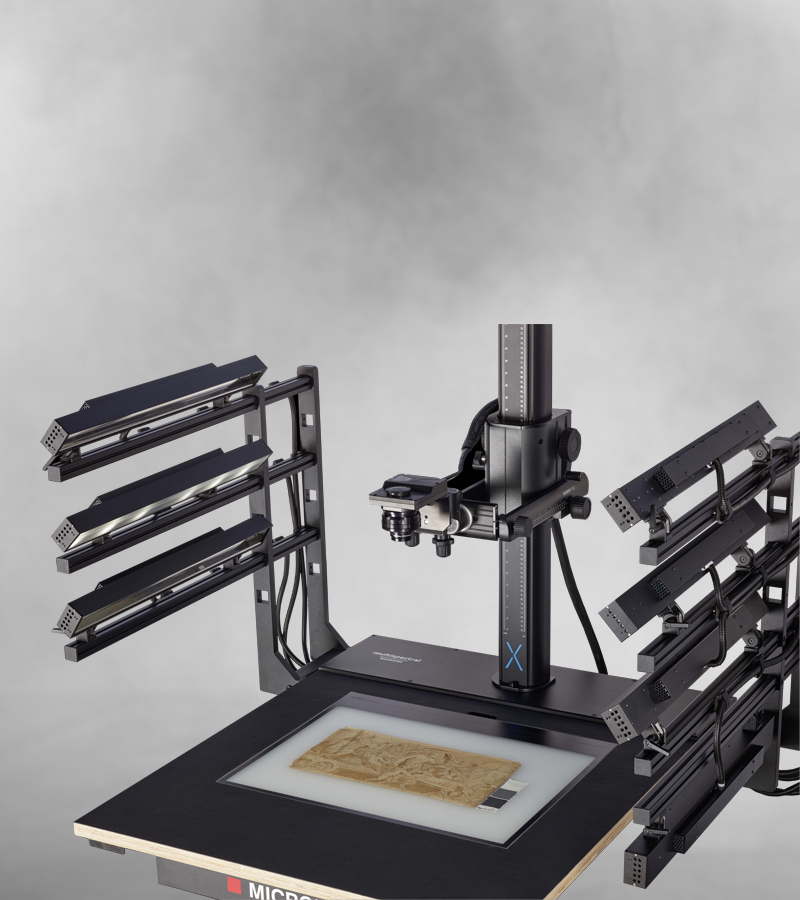
Multispectral
book2net đã phát triển một phương pháp mới để phân tích đa diện các tài liệu và bản vẽ. Người dùng có thể thực hiện các lần scan đơn lẻ hoặc tổng hợp ở các bước sóng được xác định trước. Kết quả scan có thể được xếp chồng lên nhau và phân tích với độ chính xác đến từng pixel. book2net Multispectral hoạt động mà không cần thay đổi bộ lọc (do đó không bị rung) và không cần hiệu chỉnh hậu kỳ về độ sắc nét và lấy nét trong phạm vi quang phổ (chính xác theo tỉ lệ pixel).
- Chụp ảnh quang phổ
- Bộ cảm biến màu ma trận độ phân giải cao
- Dải đa phổ 365 – 1150 nm
- Không có bộ lọc vật lý
- 3 vạch đèn LED với dải quang phổ rộng đồng nhất (UV, IR, VIS)
- Chiếu sáng khu vực đồng nhất
- Hình ảnh màu sắc trung thực theo chuẩn Metamorfoze, Fadgi-4Star, ISO/TS-19264-1
- Hệ thống hiệu chuẩn
- Các quy trình Scan được tiêu chuẩn hóa
- Cài đặt tiêu cự và khẩu độ không đổi của UV-IR
Chúng tôi tiết lộ những bí mật và biến những thứ vô hình thành hữu hình:
Hệ thống book2net Multispectral là một công cụ sáng tạo, không xâm lấn để phân tích khoa học, vật liệu và pháp y. Nó có thể cung cấp cái nhìn toàn diện về các tác phẩm nghệ thuật, bao gồm nguồn gốc, tính xác thực hoặc tình trạng hiện tại. Với sự trợ giúp của hệ thống, người dùng có thể tạo tối đa 11 bản scan trong nhiều dải bước sóng khác nhau và sự kết hợp của chúng có thể được tạo trong vòng vài giây trong các quy trình hoàn toàn tự động.
Việc hình dung các chữ viết bị phai màu cũng như việc thể hiện các nét vẽ thiếu có thể được thực hiện dễ dàng. Ngoài ra, người dùng còn có thể phân tích sự kết hợp vật liệu trong các tài liệu viết, vẽ và hội họa hoặc dấu vết của các quá trình lão hóa hữu cơ. Tài liệu cũng có thể được kiểm tra tính xác thực bằng cách phân tích tính đầy đủ của các đặc điểm cụ thể.
book2net HD Camera
Camera X71 không chỉ thiết lập các tiêu chuẩn mới trong lĩnh vực máy ảnh kỹ thuật số hiện đại, nó còn là trái tim của tất cả các máy scan của chúng tôi. Công nghệ cảm biến CMOS của chúng tôi là thành phần chính của hệ thống và cho phép chụp các tài liệu lưu trữ, sách, thẻ, con dấu và đồ vật có kích thước và cấu trúc khác nhau ở độ phân giải cao. Đặc trưng của máy ảnh X71 là chất lượng hình ảnh hạng nhất, khả năng xử lý linh hoạt và tốc độ scan đáng kinh ngạc.
Không có bộ lọc vật lý
Scan mà không cần thay đổi bộ lọc (tốn thời gian, gây rung và lệch điểm ảnh) và trong một phổ ánh sáng rộng để người dùng có thể tự do lựa chọn các dải quang phổ riêng lẻ là đặc trưng cho cách tiếp cận của chúng tôi.
Hệ thống chiếu sáng đồng nhất
Các dòng đèn LED dải rộng (UV, IR, VIS) đảm bảo chiếu sáng bề mặt đồng nhất trong các dải quang phổ. Đây là điều kiện tiên quyết để phân tích màu sắc, lệch màu, thang độ xám và vật liệu.
Chuẩn hóa quy trình quản lý
Giao diện người dùng trực quan, quá trình sử dụng dễ dàng, các tiêu chuẩn được xác định trước. Đối với mỗi loại bản thảo, có thể xác định cấu hình scan cho từng dải phổ. Các quy trình scan, ánh sáng và phân tích tự động có thể được lưu trữ dưới dạng tiêu chuẩn hoặc kết hợp với nhau để tạo thành chuỗi scan.
Tập trung vào các yêu cầu bảo tồn
Các nguồn sáng LED được lựa chọn cẩn thận kết hợp với thời gian chiếu sáng ngắn nhất có thể đảm bảo độ phơi sáng đặc biệt nhẹ nhàng. Trắc diện thông minh và phần mềm phân tích làm giảm quá trình scan xuống mức tối thiểu.